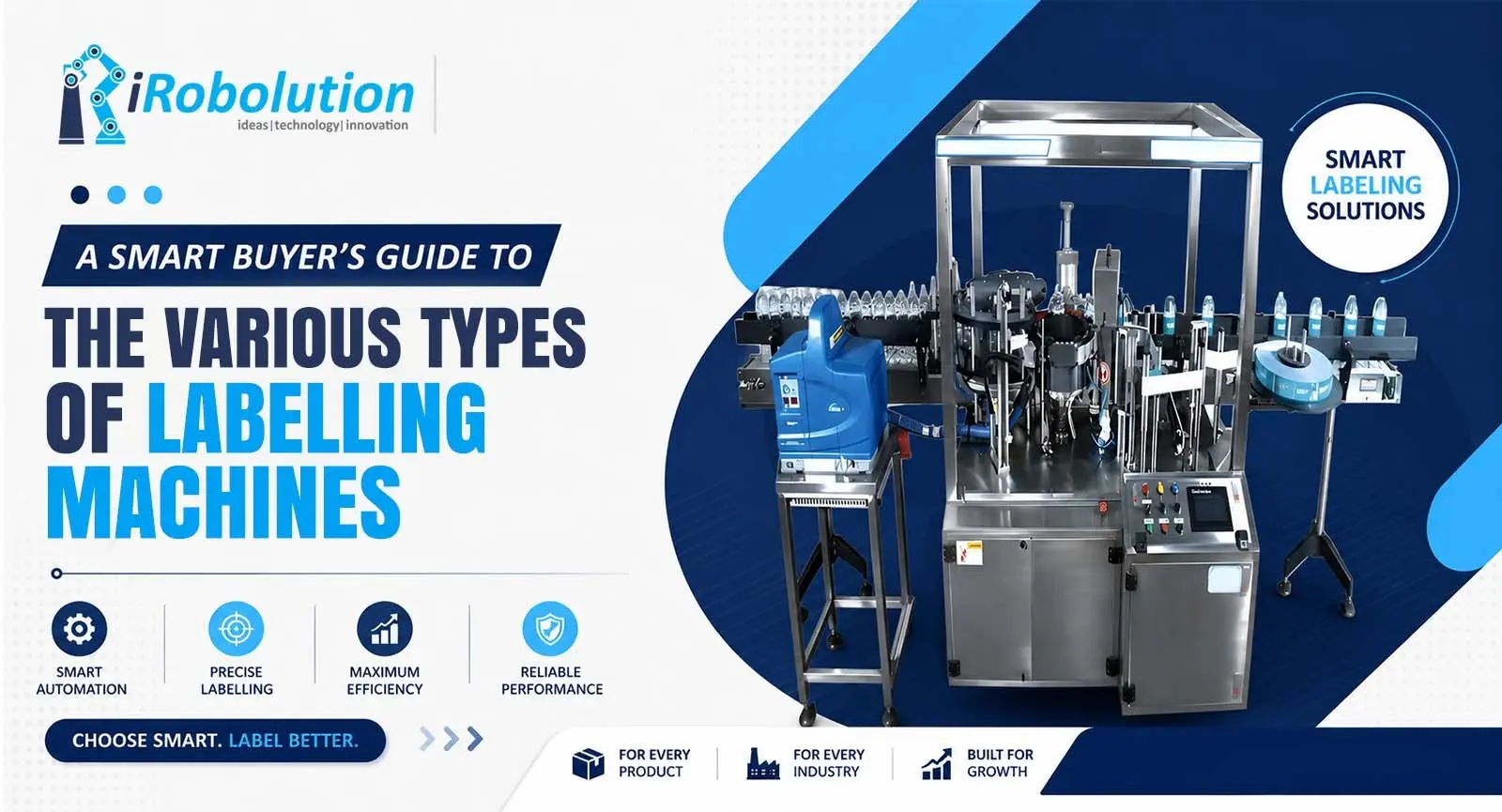
Ever pick up a bottle or box and wonder how that label got on so perfectly? Chances are, a labelling machine did the job. These machines are the backbone of packaging lines across industries. But if you’re looking to buy one, you’re probably staring at a wall of options and wondering which type actually fits your needs.
The truth is, labelling machines aren’t all the same. Some work great for round bottles but fail on square boxes. Some are fast but overpriced for small runs. And if you grab the wrong one, you’ll end up with wrinkled labels, slow production, or a machine that just won’t handle your product shape.
This guide walks you through the different types of labelling machines in a way that actually makes sense. No dumps, just the real insights that you need to know before spending money.
Why You Need a Labelling Machine (Even If Manual Seems Fine)?
Starting out? Manual labelling works. You load the product, press a button, label sticks. But once you’re pushing a few thousand units a day, that approach falls apart. Labels go crooked. Workers get tired. Consistency drops.
A labelling machine fixes all that. It applies labels fast, accurately, and without the human mistakes. Some even print batch numbers, expiry dates, or barcodes right on the label. The right machine cuts labor costs, reduces waste, and makes your packaging look professional on the shelf.
The First Big Choice: How Much Automation Do You Need?
This is where most buyers get stuck. You’ve got three main paths:
Manual machines are the budget pick. You load everything by hand, pull a lever, and the label goes on. Cheap, simple, basically no training needed. They hit around 1,000 labels an hour on small round bottles. Perfect for startups, small businesses, or testing a new product before you scale.
Semi-automatic machines are the middle ground. You still load the product, but the machine applies the label when you hit a switch (foot or hand). They’re compact, handle front-and-back labeling, and move faster than manual. Good for small-to-medium batches where you’re not running 24/7.
Automatic machines are the real production beasts. Products ride on a conveyor, the machine senses them, and labels go on without anyone touching them. You get consistent placement, high speed, and way lower labor costs per unit. These integrate into packaging lines and handle custom setups. If you’re doing high-volume production or running 24/7, this is your pick.
Where Does the Label Actually Go?
Once you’ve picked your automation level, you need to figure out where the label needs to stick. This shapes which machine you grab.
Flat labelers hit flat surfaces—tops of boxes, lids, caps, cartons, and bags. They work across pharmaceuticals, cosmetics, food, chemicals, and electronics. One machine handles most flat jobs, especially when you’re switching product sizes often.
Side labelers hit the side or curved surface. Think cosmetic flat bottles, square boxes, and glass or plastic bottles. They’re used for batch numbers, ingredients, and dates—variable data on food, cosmetics, and household products. Two-side labelers slap labels on the front and back simultaneously, which speeds things up.
Corner labelers apply labels across two adjacent surfaces, usually to stop tampering. Big in poker boxes, electronics packaging, and medicine boxes. They run 30–60 pieces per minute with tight accuracy. You can hook them up with flat labelers for continuous labeling.
Wrap-around labelers roll the label around the container’s circumference. Less complex than pick-and-place, but gives you shrink-wrap-like results without the sleeve. They dominate the round bottle market but work on plastic, glass, metal, and cardboard. The wrap maximizes printable space—perfect for beverages where you need brand info + UPC on one label.
What Kind of Label Are You Using?
The label type matters too. Different machines use different adhesives.
Wet glue machines use liquid glue at room temperature. Great for paper labels on round bottles, jars, and cans—glass or plastic. Still the go-to in beverage filling where things get wet. You can do fancy labels—embossed, complex shapes, even multiple labels per container.
Self-adhesive machines (also called pressure-sensitive) use pre-glued labels on a reel. No water, no heat. They’ve replaced wet glue in many places because they’re cleaner and work with non-paper materials. Labels can be die-cut into weird shapes. Pressure activates the adhesive when the label hits the product. Works on soft packages and rigid containers.
Hot melt machines use adhesive that’s solid at room temp but heated to liquid before application. Used for wraparound labels covering most of a container body. Glue goes through nozzles, containers rotate for precise gluing, and the label sticks without glue mess elsewhere.
Shrink sleeve machines shoot heat-shrinkable plastic sleeves over bottles on a conveyor. The sleeve opens from flat, gets cut, drops over the bottle, and then goes through a heat tunnel that shrinks it tight to the container. They cover the entire body, give you 360° branding, and provide tamper evidence. Big in soft drinks, cosmetics, and toiletries—especially contoured bottles.
How Your Product Moves Through the Machine?
Some machines handle bottles standing up. Some need them on their side.
Vertical labelers have bottles pass upright. Works great for bottles with slight taper or square/rectangular shapes. Food jars, cosmetic bottles, and pesticide bottles—anything steady on a conveyor. You can do partial or full labels.
Horizontal labelers have bottles travel on their sides. Use these for unstable round containers—pharmaceutical vials, ampoules, syringes, and bottles with rounded bottoms that won’t stand.
Inline vs. Rotary: The Speed Question
This is where production volume really matters.
Inline labelers keep bottles on the conveyor during labeling. Perfect for simple stuff. Wrap a round bottle at 50 bpm? Inline handles it. Front-and-back on rectangular bottles at 80 bpm? Also inline. Sliding rails and height tweaks handle different sizes.
Rotary labelers transfer bottles to a turret during labeling. Each bottle gets held between a plate and centering bell, rotating 360° for perfect positioning. The circular design packs multiple stations in a small footprint. Dedicated parts handle bottle changes. Built for high speed—over 500 units per minute. Big in wine, drinks, food, cosmetics, and chemicals.
Ways Buyers Go Wrong
- Buying manual when they need automatic (or overspending on rotary when inline works)
- Ignoring product shape—round bottles need different machines than square boxes
- Cheaping out on Labelling Machines manufacturers—cheap machines drift, break down, give bad readings
- Thinking same specs = same performance—build quality changes everything
- Not checking if the machine fits your conveyor height, line speed, or space
Quick Checklist Before You Buy
Ask yourself:
- What’s my production volume? (Low = manual/semi-auto, High = automatic)
- What’s my product shape? (Round, square, flat, tapered, contoured?)
- Where does the label go? (Top, side, wrap-around, corner?)
- What label type? (Wet glue, pressure-sensitive, hot melt, shrink sleeve?)
- What’s my budget? (Manual cheaper; rotary/automatic cost more but save labor.)
- Do I need printing? (Some machines print batch numbers, expiry, barcodes)
Why Irobolution’s Different?
When you’re hunting for Labelling Machines manufacturers, you’ll see tons of options. Irobolution doesn’t just sell machines—they figure out what you actually need. Their engineers listen to your product specs, volume, and budget, then recommend the most cost-effective setup without cutting quality.
They build labelling machines for real production. Tight tolerances, reliable sensors, easy changeovers, and support that doesn’t disappear after purchase. Semi-auto flat labeler or high-speed rotary wrap-around? They’ll match you right.
The Bottom Line
Labelling gets messy with the wrong machine. Factor in label type, product shape, speed, budget, and automation before you buy. The right labelling machine pays for itself in labor savings, fewer rejected units, and packaging that looks sharp.
If you’re unsure what fits your operation, talk to Irobolution. The engineers walk you through options and set you up with equipment that works for your line—not just the cheapest thing on the shelf.
FAQ
Manual means you load and trigger everything by hand. Semi-automatic means you load by hand but the machine applies the label when you hit a switch. Automatic means the conveyor loads and the machine applies labels without anyone touching—good for high-volume runs.
Wrap-around labelers roll the label around the container. Rotary labelers also work great at 500+ bpm for beverage/food.
Wet glue uses liquid adhesive and works best with paper labels on round bottles, jars, and cans—still common in beverages. Self-adhesive uses pre-glued labels on a reel, is cleaner, and works with non-paper materials. Self-adhesive is the choice most industries use now.
Irobolution checks your specs, volume, and budget before recommending anything. They don’t just sell—you get a setup made for your needs without cutting quality. Tight tolerances, good sensors, easy changeovers, and real support after you buy.